

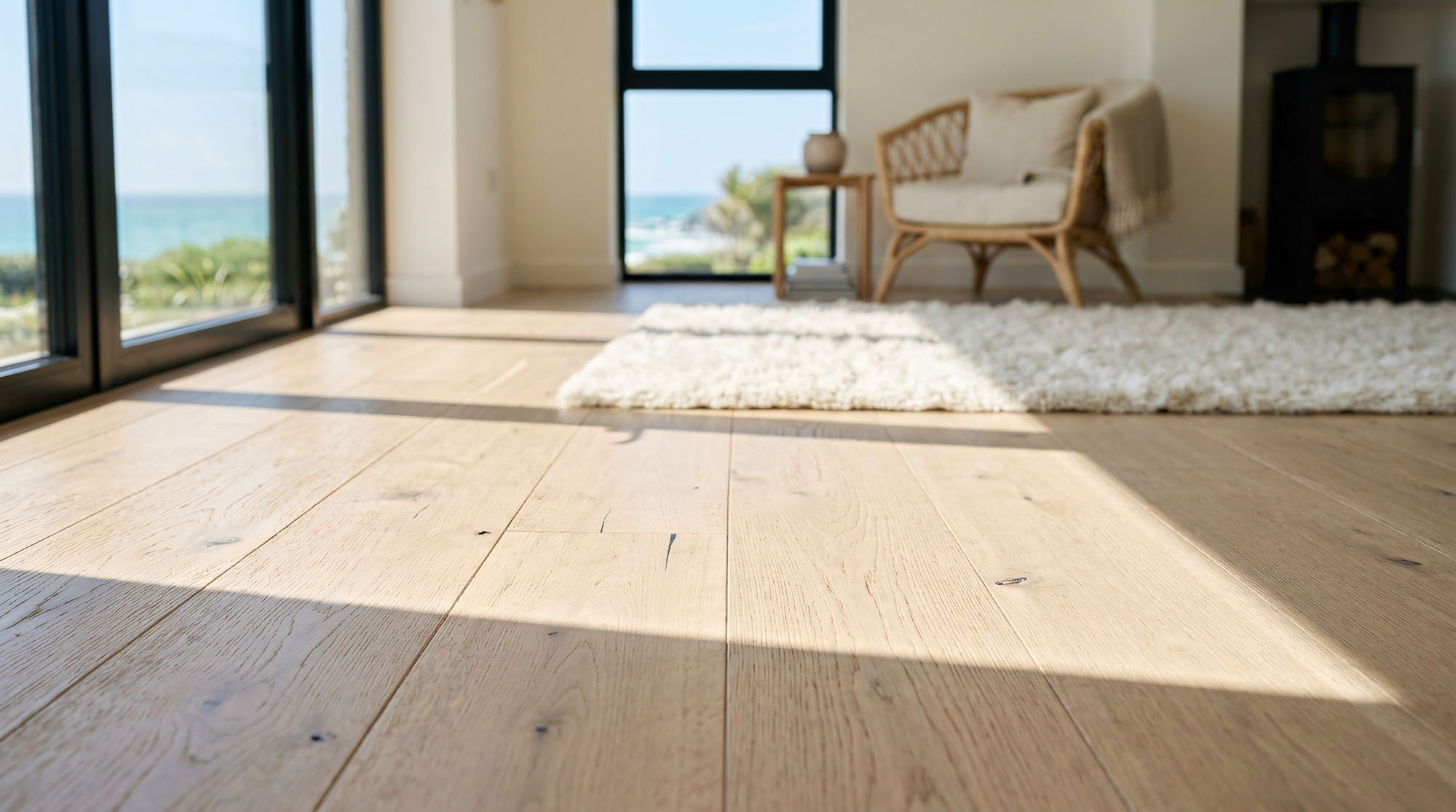
Daily foot traffic between your kitchen and pool patio gradually alters the clear finish across engineered hardwood planks. Living near Charlotte Harbor in Punta Gorda, along active family corridors in South Fort Myers, or within quiet golf communities in Naples brings distinct wear to residential wood floors. Coarse shell grit from neighborhood paths, intense sunlight pouring through pocket sliding glass doors, and seasonal humidity shifts inside closed homes test surface durability. Recognizing early wear patterns lets you refresh traffic lanes before grit wears down to the protective wear layer or damages the structural core.
Dull Walkways and Surface Scratching
Fine quartz sand and crushed coquina shell fragments carry sharp, irregular edges that act like coarse abrasive grit under shoe soles. Regular paths between your front foyer, main living room, and lanai doorways grind down the factory-applied finish over time, leaving the wood veneer vulnerable to daily spills and dirt.
Cloudy traffic corridors: Busy walkways through your open great room lose their soft luster and look hazy, even immediately after sweeping and dry dust mopping.
Bare-wood gouges: Heavy surface scratches that penetrate through the clear seal coat expose the stained wood underneath, allowing moisture from damp feet or pets to cause dark spots around the cut.
Finish peeling along plank bevels: Daily friction along micro-beveled plank edges can cause the clear sealant to flake away, catching loose dirt and mop threads.
Lanai Sunlight Fading and Discoloration
Expansive sliding glass doors flood open-concept living spaces with natural light, but direct ultraviolet rays break down wood stains and natural wood tannins over time. Unfiltered afternoon sun pouring across your floor bleaches exposed planks, causing them to lighten and lose their original depth.
Lifting a large area rug or moving a sofa often reveals stark color differences across your living room. Planks shielded beneath furniture retain their deep walnut, caramel, or espresso tones, while the wood along the sliding door line appears faded. Applying a fresh screen and recoat can blend minor shifts, but severe ultraviolet bleaching calls for targeted plank replacement or modern UV-resistant wood finishes to re-establish consistent color from the front entrance out to the lanai.
Board Cupping, Crowning, and Moisture Movement
Southwest Florida homes rest on solid concrete block foundations that naturally hold ground moisture. Quality engineered hardwood features cross-ply construction built to handle humidity swings, but sustained exposure to elevated moisture tests plank stability.
Board cupping happens when the edges of a plank rise higher than its center, creating a wavy, washboard texture across the floor. This condition points to excess moisture underneath the boards, often caused by plumbing leaks near kitchen islands, condensation along exterior slider tracks, or air conditioning systems set too high during summer months away. Crowning occurs when board centers swell higher than the edges, usually after liquid sat on the surface too long. When planks cup severely or the top wood veneer begins to lift away from the core, the plank needs replacement.
Persistent Gaps and Seasonal Movement
Wood planks expand during warm, humid summer months and contract slightly when dry winter weather and steady air conditioning run continuously. Quality engineered hardwoods accommodate these natural climate shifts, but older installations or floors placed without adequate perimeter expansion space can show permanent stress.
Wide gaps that stay open year-round between plank edges collect fine shell dust and pet hair, making routine sweeping difficult. In seasonal residences that sit unoccupied from May through October, unmonitored indoor humidity can strain adhesive bonds over the concrete slab. Planks that sound hollow underfoot, flex when walked on, or show wide separations that fail to close during humid months need professional evaluation.
Finish Recoating Versus Full Plank Replacement
Deciding between refreshing your current wood surface and replacing damaged sections depends on your floor’s construction and remaining wear layer thickness.
Many engineered hardwood floors feature a top veneer thick enough for a dustless screen and recoat. This process abrades the dulled surface layer and applies a fresh protective topcoat without sanding down into the wood grain, restoring a clean satin or matte sheen across worn living areas.
Deep water stains near patio doors, veneer checking from prolonged dry indoor air, and gouges that penetrate through thin wear layers cannot be hidden with a topcoat. Updating to modern wide-plank engineered hardwoods with thick sliced-face veneers or high-density composite cores brings fresh coastal style to your home while providing dependable resistance against active daily living.
Restore Your Wood Floors with Local Expertise
Evaluating your wood floors early protects your living spaces and prevents surface wear from turning into subfloor damage. Hessler Floor Covering has guided homeowners across Southwest Florida since 1951, providing dependable material evaluations, dedicated in-store area rug galleries, and company-vetted installation crews who manage your project with care.
Visit our showrooms in Punta Gorda, South Fort Myers, or Naples to compare full-scale displays of wide-plank engineered hardwoods, durable wire-brushed finishes, and water-resistant collections in person. When you need an experienced assessment of your current wood floors or want to explore replacement options, contact us to schedule an in-home measurement or review possibilities with our local team.


